Last checked: 2026-07-12. Ticketing, opening, security, and holiday arrangements can change; verify current Palace Museum instructions before travel.
Beijing’s Bell and Drum Towers can be a strong north-side addition after the Forbidden City for visitors who want one more historic landmark without crossing the city. The towers sit at the northern end of the Beijing Central Axis, beyond Jingshan and the north-side streets. They are a better choice for an early or comfortable finish at the palace than for a rushed late-afternoon dash.
This is not the same plan as a full Shichahai or Houhai evening. The Bell and Drum Towers are the destination: a compact history-focused stop, a chance to see the old city’s timekeeping landmarks, and perhaps a short nearby walk. Decide in advance whether you will enter the towers or simply view the surrounding area from outside, then build the transfer around that decision.
Quick planning snapshot
- Best for: first-time visitors who finish the palace with time and energy for one additional historic stop.
- Start point: the Gate of Divine Prowess north exit is the natural starting side for this plan.
- Plan length: allow a transfer, a focused tower visit, and a buffer for queues, stairs, and the journey back.
- Best approach: use a taxi when your group is tired or time is tight; use public transport only after checking the live route and station exit.
- Skip it when: you leave the palace near closing, have already added Jingshan and Shichahai, or need a direct hotel return.
Why the north exit matters
The Palace Museum is visited south to north. Its official visitor information identifies the Meridian Gate as the south entrance and the Gate of Divine Prowess as the north gate; East Prosperity Gate can also be used as an exit. That arrangement makes the Bell and Drum Towers a logical north-side continuation, but it does not mean they are immediately outside the palace gate. Check your planned exit before the day begins with the Forbidden City entrance and exit guide.
Do not force the extension just because it is in the same broad direction. A full palace visit can already involve long walking distances, heat, crowd pressure, and several stops on stone paving. The crowd bottlenecks guide is useful for deciding whether you are likely to finish with enough time to continue.
When the Bell and Drum Towers fit your day
They fit best after a focused palace route
The route works well when you have used a clear palace plan, kept optional galleries under control, and are leaving before the final rush. It can be especially appealing for visitors interested in how Beijing’s Central Axis connects imperial buildings with the older city north of the palace.
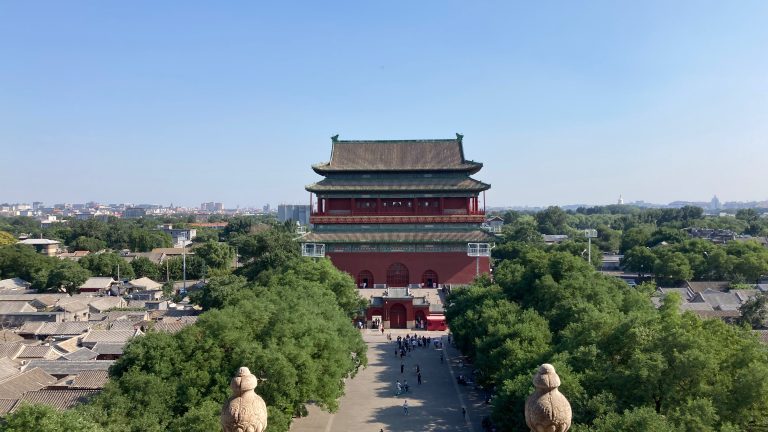
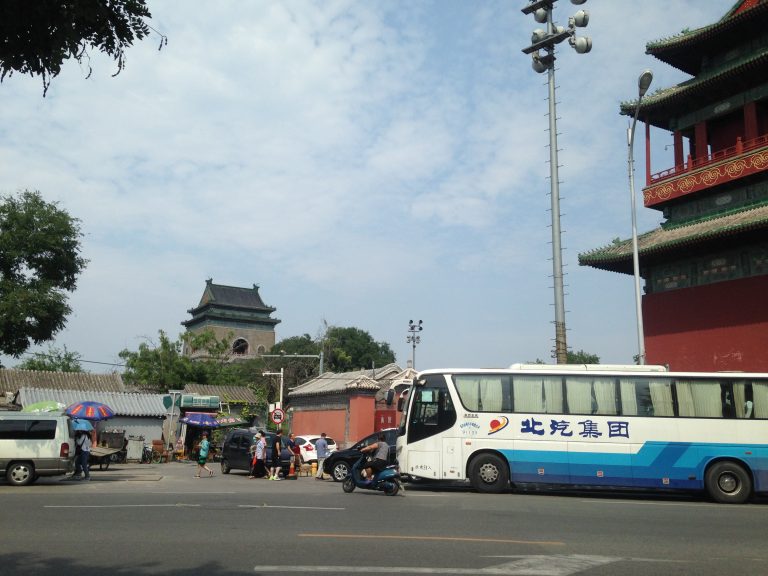
The Beijing tourism authority describes the towers as northern-end Central Axis landmarks that served as the capital’s time-reporting centre through the Yuan, Ming, and Qing periods. The Drum Tower and Bell Tower are close together, so the reward is concentrated rather than spread across a huge site.
They are not a late-closing substitute
Do not assume that a historic tower is open whenever a nearby street is lively. Admission, performances, ticket procedures, and last-entry times can change. Check the official Bell and Drum Towers channel or current local listing on the day, and regard the exterior area as the fallback if the inside visit no longer fits. The same rule applies to the Palace Museum: confirm your time slot and visitor rules before adding anything after it.
Getting there: walking, taxi, or subway
A north-side walk is possible for people who still feel fresh, particularly if you planned to include Jingshan. It is not the best option for a family with a stroller, people carrying bags, or anyone who has already spent several hours in the palace. For most tired groups, a short taxi transfer is the simplest way to protect the rest of the evening.
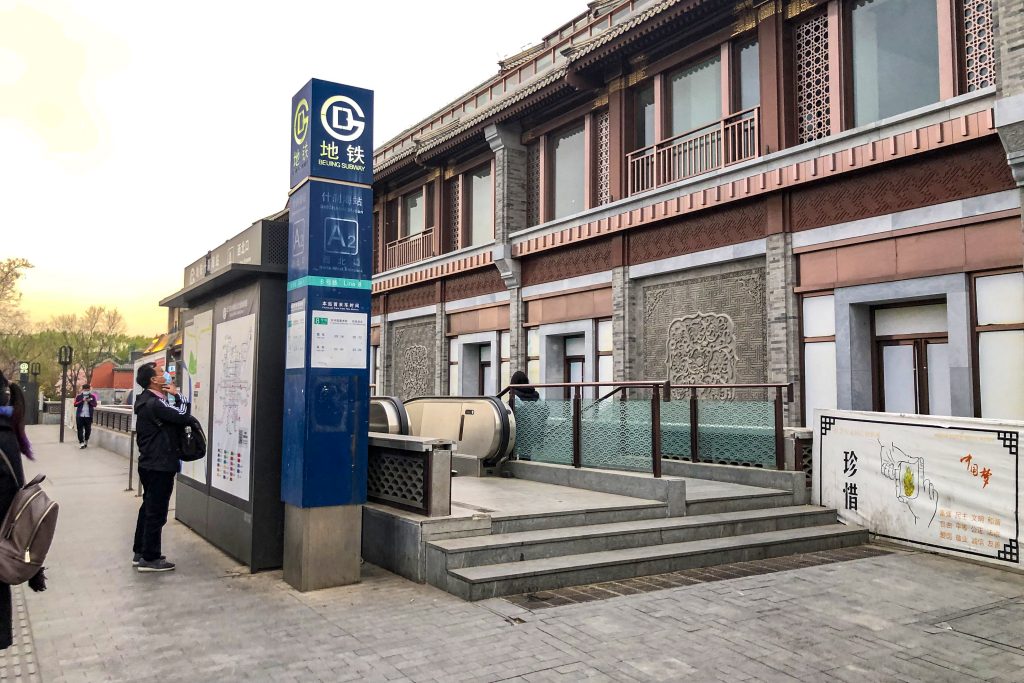
Public transport can work, but use a live map rather than copying a route from an old itinerary. The transport guide on this site explains why station exits and the final walking leg matter as much as the line number: Forbidden City transport plan. Shichahai Station is often useful for this wider north-side area, but confirm the current exit and walking direction before you commit.
Use Jingshan as a decision point, not an automatic extra
Jingshan Park lies directly north of the Palace Museum and is the obvious waypoint between the palace and the Bell and Drum Towers. It can be an excellent choice when you want a panorama and a short reset, but it also adds stairs, time, and another ticketed stop. Read the Forbidden City and Jingshan route guide before combining all three places.
A useful rule is to choose one emphasis. Make Jingshan the priority if the view matters most. Make the towers the priority if you want the Central Axis history and an indoor heritage stop. Trying to make both extensive on a hot or crowded day can leave little time for the actual Bell and Drum Towers.
What to see once you arrive
Start with the relationship between the two buildings. The Drum Tower and Bell Tower are close together but different in construction and function. The Beijing tourism authority notes that the towers were used for timekeeping and that the Bell Tower is about 100 metres north of the Drum Tower. That makes a focused visit easy to understand without turning it into an all-day history lesson.
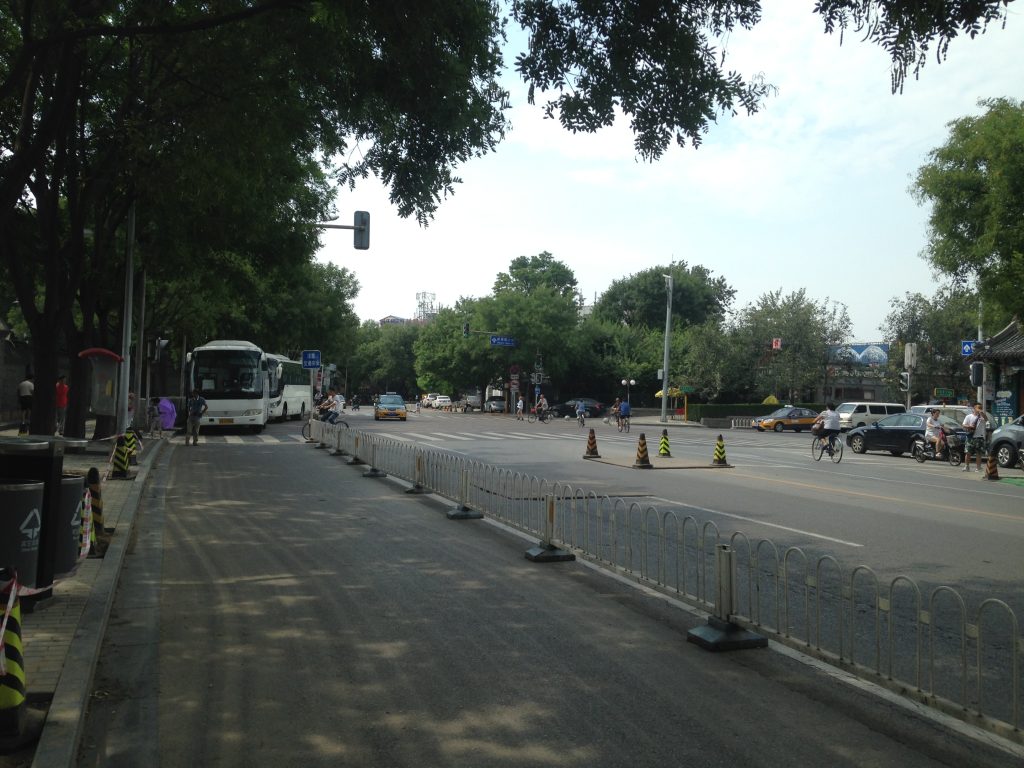
Keep the immediate area simple: look at the buildings, decide whether an interior ticket and stairs are suitable for everyone, then choose one nearby street or cafe stop. Do not mistake a compact map distance for a guarantee of quick movement. Crowds, pedestrian crossings, heat, and navigation pauses still take time.
A short Central Axis extension
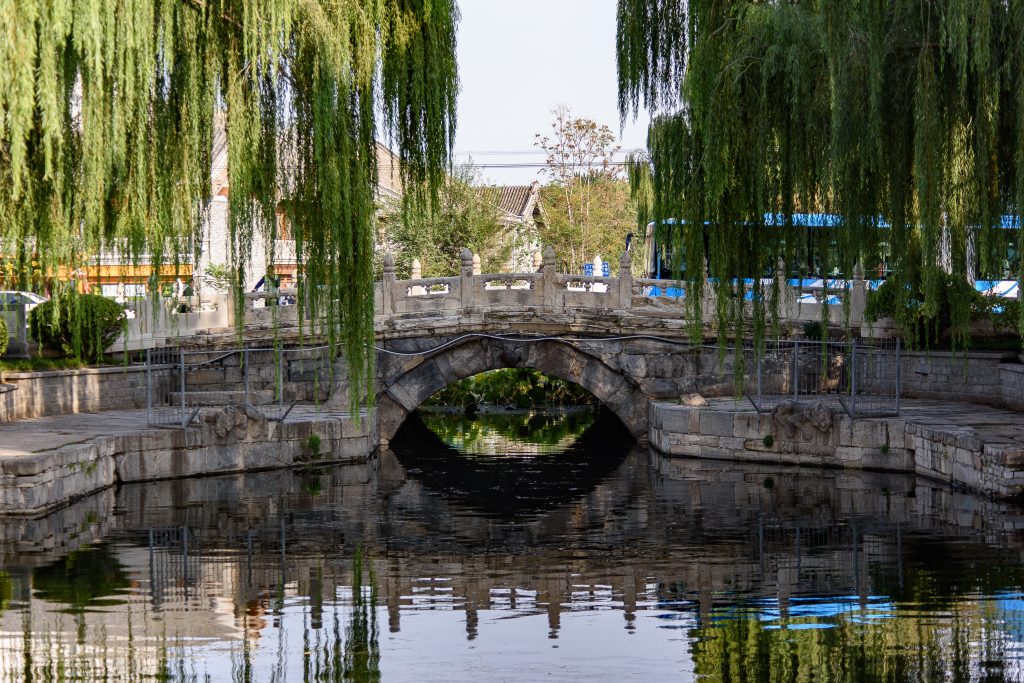
For visitors who want a quiet outdoor addition, Wanning Bridge is part of the historic north-side landscape near the tower area. It is a small visual stop rather than a reason to stretch the day into another long route. Add it only when the group has time and the weather is comfortable.
If a water walk, dinner, and a more open-ended evening matter more than the towers themselves, use the separate Forbidden City to Shichahai and Houhai plan. It is designed for a different rhythm, with the lake area as the destination rather than the Bell and Drum Towers.
A realistic route order
- Finish the Forbidden City without rushing the final courtyards or exit zone.
- At the north exit, decide honestly whether the group still has energy for another historic site.
- Take the simplest transport option to the tower area.
- Visit the Drum Tower and Bell Tower if current admission timing allows; otherwise enjoy the exterior and nearby streets.
- Choose one brief food or coffee stop, then return directly to your hotel or next evening plan.
Before you go
Use the Palace Museum visitor information to confirm your palace plan, and check the current Bell and Drum Towers arrangements through the Beijing tourism overview or the attraction’s current official channel. If your palace ticket is not already settled, start with the Forbidden City tickets guide for foreign visitors.
The Bell and Drum Towers are worthwhile when they remain a focused extension, not a second full day after the palace. Protect the transfer time, check current access before you leave, and give your group permission to stop after one well-chosen north-side landmark.
Related Forbidden City Guides