Last checked: 2026-10-27. Ticketing, opening, security, and holiday arrangements can change; verify current Palace Museum instructions before travel.
Yanxi Palace is a worthwhile Forbidden City side stop if you are curious about the unexpected: an unfinished Western-style structure inside a complex better known for timber halls and tiled roofs. The remains of Lingzhao Pavilion, often called the Crystal Palace, make this courtyard different from the throne rooms on the central route. It is best treated as one deliberate eastern detour, with time left to complete the rest of your palace visit.
Current access, checked October 27, 2026: Yanxi Palace is temporarily closed. The Palace Museum’s dated notice specifies conservation investigation from September 1 through October 31 and a planned reopening on November 1. If you are visiting before then, leave it out of your route. For November or later, confirm that reopening has taken place before making it a priority.
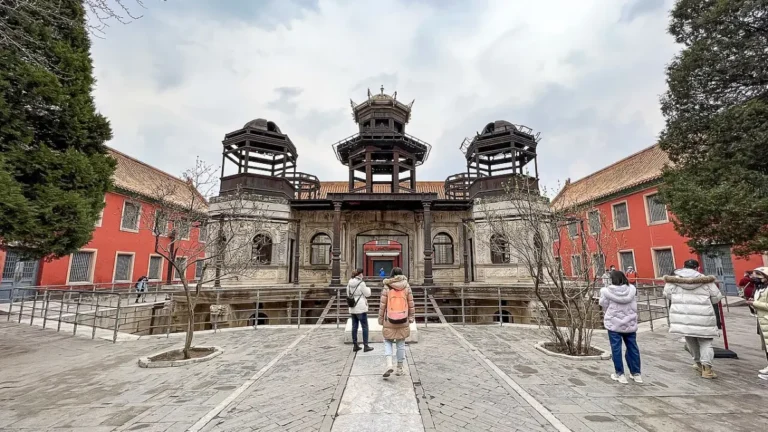
Historical photo: N509FZ / Wikimedia Commons, CC BY-SA 4.0. Resized as WebP; not evidence of current access.
Quick decision: should you add Yanxi Palace?
- Add it when open if unusual architecture interests you and you can spare about 20-30 minutes for a focused look, plus the walk to and from the courtyard.
- Keep it optional if this is your first palace visit and the central halls are the main reason you came.
- Skip it if the access notice still says closed, you are running late, or your group is already tired.
- Change your expectations if you are coming because of a television drama: the surviving structure is not a complete, furnished imperial apartment.
The time allowance above is a planning estimate, not an official tour length or a prediction of the queue. Getting to the courtyard can take longer than looking at the building, especially if you start from the other side of the museum. Choose it before your day becomes a sequence of return walks.
What is the Crystal Palace?
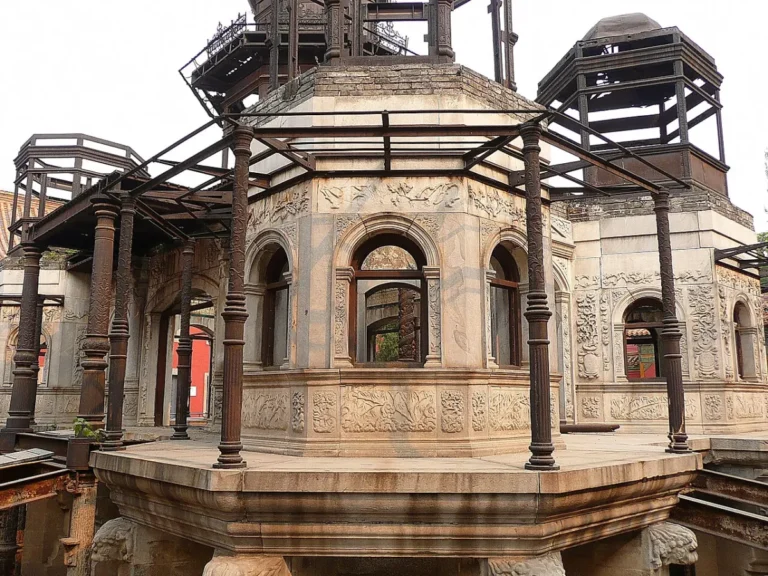
Yanxi Palace belongs to the East Six Palaces area of the Forbidden City’s Inner Court. According to the museum’s Yanxi Palace building history, construction of a new Western-style water hall began on this site in 1909. Empress Dowager Longyu gave it the name Lingzhao Xuan, and it became popularly known as the Crystal Palace.
The project was left unfinished. The museum’s Lingzhao Pavilion feature links the halt to the 1911 Revolution and records imported materials, including British structural steel and German wall tiles. Those details help explain why the surviving framework looks so different from the neighboring palace architecture.
Look at it as an incomplete building with an unusual construction story. The nickname can create an image of a glittering glass hall, but that is a poor description of what visitors should expect to find today. The photographs here are historical views of the remains, not images of completed restoration or proof of current access.
How to fit the courtyard into your route
First secure your museum admission and understand the entrance arrangement. Yanxi Palace sits inside the Forbidden City; it has no independent street entrance that lets you start your visit there. Use the ticket guide for foreign visitors for the reservation process, then save the courtyard’s Chinese name, 延禧宫, on your phone.
On the day, decide whether you want an eastern side route before committing to the western courtyards. If Yanxi is open, use the current museum map and signs to work it into your Inner Court visit. The East Six Palaces route guide provides the wider context. You do not need to visit every eastern courtyard simply because you have chosen one.
A useful sequence is to complete the central sights that matter most to you, take the eastern branch when access and time allow, then resume your route toward the remaining Inner Court sights and exit. The precise turn depends on the day’s open passages. Follow current barriers and staff directions rather than assuming every line on an old map is available.
If you have already reached the Imperial Garden and are ready to leave, reassess the extra walking before going back for Yanxi. A single missed courtyard is usually preferable to finishing the day exhausted or rushing through the final part of the museum.
Three things to notice when access resumes
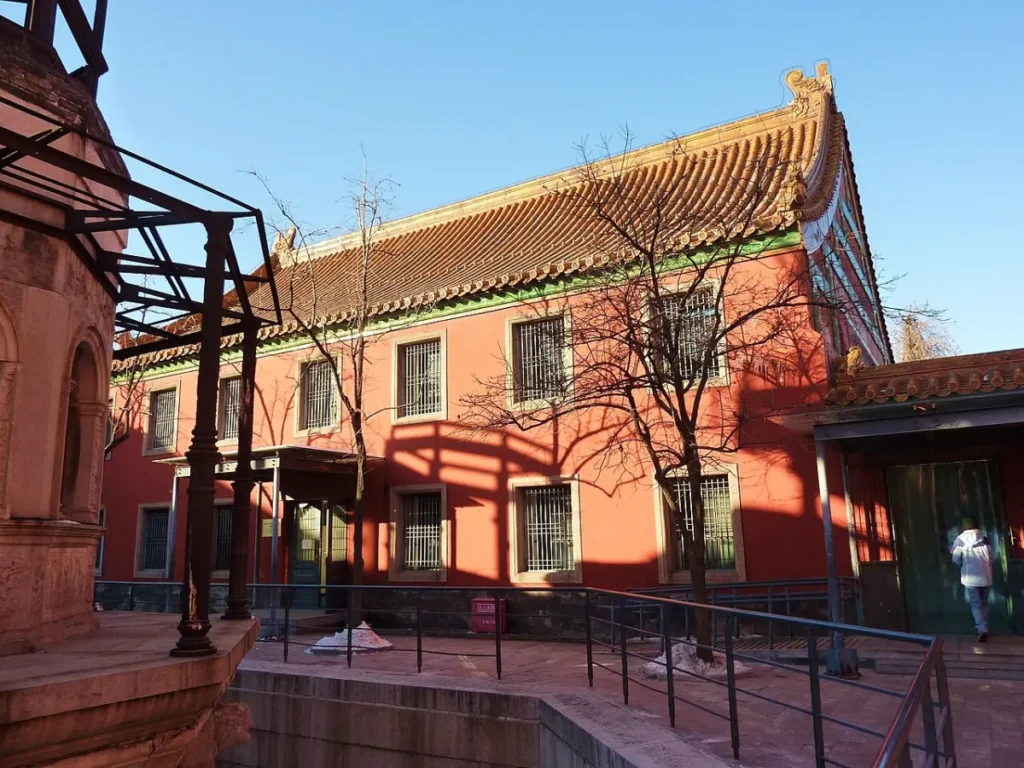
Start with the outline. From the permitted viewing area, pause far enough back to understand the structure as a whole. Notice the exposed openings and the relationship between the surviving framework and the surrounding courtyard. That first view explains more than immediately moving in for a close photograph.
Then look at the material changes. Compare stone surfaces, metal components, and ornamental details visible from your position. The Beijing Municipal Cultural Heritage Bureau’s study of Lingzhao Pavilion decoration discusses the combination of Chinese and Western decorative elements, including dragon and acanthus motifs. Use that as an invitation to look closely, not a checklist that requires approaching fragile surfaces.
Finally compare it with another courtyard you have already seen. Think about the different rooflines, building materials, and sense of enclosure. You do not need another long detour for the comparison: the value comes from paying attention to the contrast during the route you are already following.
Stay outside any restricted sections. An open courtyard does not mean that the unfinished structure is safe to enter, climb, or touch. Conservation work can leave only part of a site accessible, and staff may direct visitors through a limited viewing route.
Photographs without blocking a small courtyard
Take one wider image to record the setting, then one detail if space permits. Step clear of the entrance before stopping, and avoid waiting in a narrow passage for an empty frame. Other visitors may be trying to see the same feature or leave the courtyard.
For a useful travel photograph, keep the surrounding context in view instead of cropping the remains until they resemble a complete building. Do not cross a barrier to remove it from your shot. If photography rules are posted, follow them even if older travel photographs show a closer viewpoint.
Our palace photography route can help you choose a few complementary stops. Yanxi works best as a change of architectural subject, rather than another location where you feel obliged to take dozens of images.
If Yanxi is closed when you arrive
Keep the main palace visit moving. Check the entrance notice or ask staff once, then continue to an open section that fits your existing route. Do not walk around the outer wall looking for another way into the courtyard. A temporary closure can affect the whole visitor approach, not only the building itself.
If you mainly wanted the experience of a smaller Inner Court space, choose an open courtyard nearby after consulting the current map. If you wanted the specific Crystal Palace remains, accept that another courtyard will not substitute for them and save the stop for a future visit.
For a short day, return to the priorities in the half-day itinerary. Dropping a closed side stop leaves more room to understand the main halls, take a proper break, and reach the exit at a comfortable pace.
Before-you-go checklist
- Recheck the Yanxi closure notice and the museum’s latest announcements.
- Confirm your Palace Museum admission and carry the booked identification.
- Save the Chinese names 延禧宫 and 灵沼轩 so staff can identify your destination.
- Allow walking time as well as viewing time; decide which other optional stop to omit.
- Use the current map for open passages and follow local conservation barriers.
- Agree on a meeting point if your group separates for the side visit.
Yanxi Palace can add a memorable change of pace to a Forbidden City visit once access resumes. Make the decision around the actual opening status and the time you have left, then give the surviving building a few attentive minutes rather than letting a famous name dictate the entire day.
Related Forbidden City Guides