Last checked: 2026-09-17. Ticketing, opening, security, and holiday arrangements can change; verify current Palace Museum instructions before travel.
A Palace Museum ticket is not the only booking to think about if you want to see the 2026 Tang and Song painting and calligraphy exhibition at Wenhua Hall. The exhibition has its own reservation requirement, and its two phases show different periods of art. Choose your date around the works you hope to see, then fit the gallery appointment into your palace route.
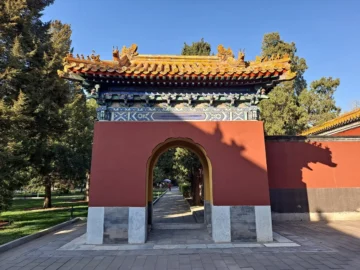
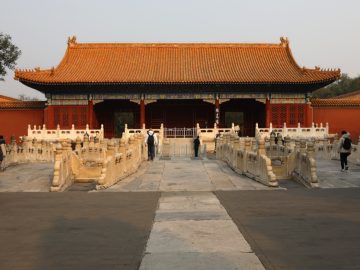
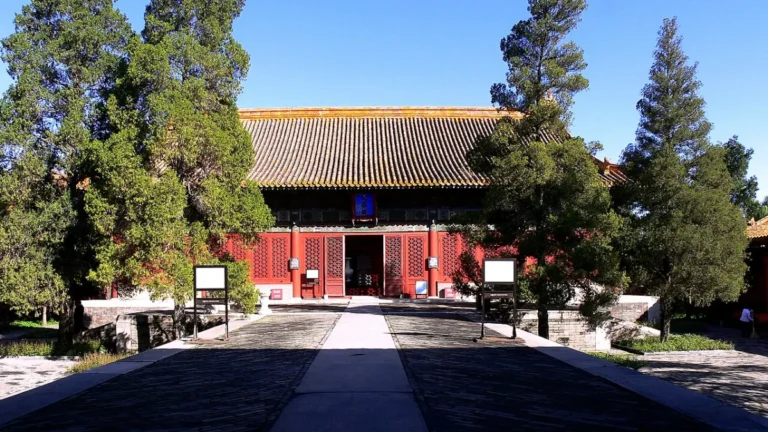
This is a good addition for visitors who want time with paintings and calligraphy rather than only photographs of palace buildings. Allow a generous part of your museum visit for it, and remove another optional stop instead of trying to squeeze an exhibition into an already full afternoon. The photographs here show the historic buildings, not the current exhibition installation or its artworks.
Exterior photograph: Gisling / Wikimedia Commons, CC BY-SA 3.0; resized as WebP and cropped for the thumbnail.
The dates and booking rule that matter
Checked September 17, 2026: the Palace Museum’s official exhibition announcement lists Dianze: Tang and Song Painting and Calligraphy at Wenhua Hall from September 1 to November 1, 2026. The display changes between two phases:
- September 1-27: the first phase focuses on Tang and Five Dynasties painting and calligraphy.
- September 28-29: the exhibition is closed for the changeover.
- September 30-November 1: the second phase focuses on the Northern and Southern Song.
The announcement says the exhibition does not sell a separate ticket, but requires a reservation through the Palace Museum WeChat mini program. Do not interpret that as free access to the Forbidden City itself. Check museum admission and exhibition availability together, including the ordinary closed-day rules and any temporary notices.
Book the exhibition as well as palace admission
Start with the Palace Museum booking guide for foreign visitors, then locate the exhibition in the museum’s own mini program. Use the Chinese title 典则:唐宋书画展 and venue 文华殿 to distinguish it from other exhibitions. Save those names as text so you can show them to staff if needed.
Before completing your plans, check that the selected exhibition date matches your museum visit. If the booking interface assigns a time window, make sure you can reach the hall after museum entry, security, and the walk from Meridian Gate. Do not schedule two appointments so closely that a normal queue makes the second one impossible.
Keep the confirmation for each required booking accessible, with the same identification you used to reserve. A screenshot can help you find the details again, but follow any live verification instructions in the official system; do not assume a saved image replaces the required check-in method.
If you cannot find a suitable identification option or the exhibition reservation fails, ask the museum before making a special journey for it. The official announcement gives the visitor hotline as 400-950-1925. Do not rely on an unofficial seller’s claim that ordinary palace entry guarantees admission to every gallery.
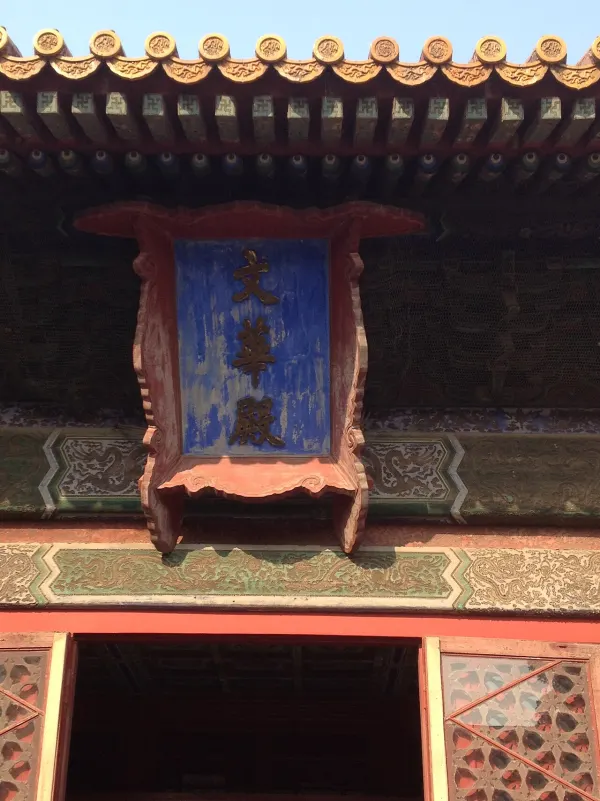
Where Wenhua Hall fits into the palace
Wenhua Hall, also translated as the Hall of Literary Glory or Literary Brilliance, is in the eastern part of the Outer Court. The museum’s building description places it east of Xiehe Gate, opposite the western Wuying Hall complex. The similar-sounding names are easy to confuse, so check the Chinese characters rather than following a half-remembered English name.
Plan the stop while you are still in the southern part of your visit, subject to your reserved time and the day’s permitted route. It is not in the northern Imperial Garden or the East Six Palaces. Waiting until you have completed the inner palaces before looking for it can create a long return walk.
Enter the museum through the normal visitor entrance and follow the current signs toward Wenhua Hall. Read our Meridian Gate entrance and exit guide before choosing a drop-off point. An exhibition venue inside the museum is not a separate street entrance, and a destination pin beside the outer wall does not show where you can get in.
Choose an exhibition-first or architecture-first day
If the exhibition is your main reason for visiting: organize the day around the confirmed gallery appointment. Leave a comfortable arrival margin, then give the display unhurried attention. Afterwards, follow a selective route through the central halls and inner court rather than adding every side gallery.
If this is your first palace visit and you have only half a day: decide whether you would rather spend your spare time looking closely at art or exploring more buildings. The half-day palace itinerary is a useful baseline. Substitute the exhibition for an optional section; do not treat it as a five-minute detour.
For planning, reserve roughly 60-90 minutes for viewing, plus the approach and any waiting. This is an editorial allowance, not an official tour duration or queue forecast. Someone reading many labels may need considerably longer, while a selective visit can be shorter. Decide what you will omit if the stop takes longer than expected before you enter the queue.
A late museum arrival leaves less flexibility. If the exhibition is non-negotiable, do not assume you can also complete the longest palace route before closing. If architecture matters more to you, keep the main route and save a special exhibition for a visit when its booking and your schedule align.
Look at a few works carefully instead of rushing every case
You do not need specialist knowledge to enjoy painting and calligraphy. Begin with a work that catches your attention, read its label, and look again. In a landscape, notice how paths, water, and empty space guide your eye. In calligraphy, compare the rhythm and spacing of the strokes even if you cannot read the characters.
Pick a few works for sustained attention, then use the remaining time to notice contrasts. Trying to photograph every label can turn the visit into a recording exercise rather than a chance to look. If a case is crowded, move to another available display and return only if circulation permits.
The two exhibition phases should not be treated as the same checklist. Check the current official information for the particular artist or work you hope to see. A photograph from a different phase, an older exhibition, or an online collection page is not proof that the object is in the room on your date.
Separate the exhibition from the neighboring buildings
The Wenhua complex has its own architectural interest. Its historic role included imperial lectures on the classics, and the nearby Wenyuan Pavilion was built behind it. However, an exterior view or a building appearing on the museum map does not establish that you can enter its interior during this exhibition.
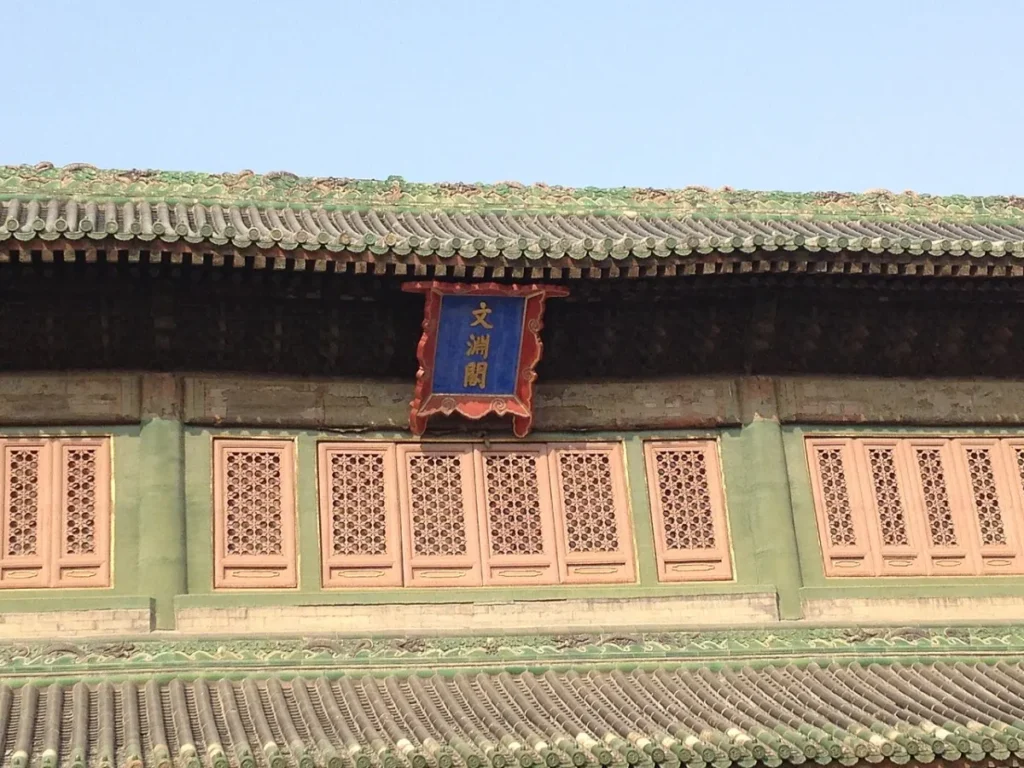
Do not confuse Wenhua Hall with the former location of an exhibition described in an old guidebook. The museum’s 2021 ceramics gallery announcement records the move from Wenhua Hall to Wuying Hall. For this visit, follow the current painting and calligraphy exhibition’s venue and booking instructions, not an old ceramics-gallery itinerary.
Before-you-go checklist
- Confirm which exhibition phase your date falls in, including the changeover closure.
- Check museum admission and the exhibition reservation separately.
- Keep the correct identification and confirmations easy to retrieve.
- Save the venue name in Chinese and locate it on the current museum map.
- Choose one optional palace stop to drop if viewing or waiting takes longer.
- Follow gallery signs on photography and circulation; never assume flash or equipment is permitted.
Check the museum’s latest notices again shortly before your visit. After the advertised exhibition period, do not use these dates as evidence of what Wenhua Hall will be showing next. For a general visit without this exhibition, the palace’s main route remains a complete experience in its own right.
Related Forbidden City Guides