Last checked: 2026-06-06. Ticketing, opening, security, and holiday arrangements can change; verify current Palace Museum instructions before travel.
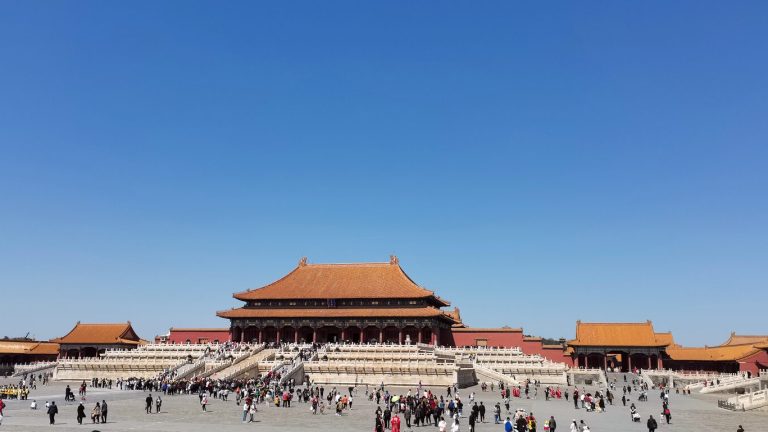
The Hall of Supreme Harmony is one of the places where many Forbidden City visitors stop without quite knowing what they are looking at. It is impossible to miss, but it is easy to rush past it as just another large red-and-gold building on the central axis.
This guide focuses on the practical visit: where the hall sits in your route, what details are worth a few minutes, how to handle crowds around the terrace, and when to move on. For ticket, opening, and access rules, always check the Palace Museum official visit information close to your travel date, because operational notices can change.
Where the Hall of Supreme Harmony Fits Into a Forbidden City Visit
Most first-time visitors reach the Hall of Supreme Harmony after entering from the south and crossing the large ceremonial courtyards. In normal visitor flow, the approach begins after the Meridian Gate area and moves north along the main axis. If you are still planning the south-side arrival, read the Meridian Gate entrance and exit guide before fixing your timing.
The hall stands at the heart of the Outer Court, before the smaller central-axis halls that continue toward the Inner Court and Imperial Garden. That location makes it a natural pause point on almost every route. If your whole visit is short, it should still be part of the core walk described in the best Forbidden City route guide.
Why This Hall Matters
The Hall of Supreme Harmony was the most important ceremonial hall in the imperial palace. It is not simply large for visual effect; its scale, raised marble terraces, roof form, and central placement all express formal hierarchy. The Palace Museum introduces the hall as a key part of the palace architecture, and the official hall page is a useful reference if you want more architectural context before or after visiting: Palace Museum Hall of Supreme Harmony page.
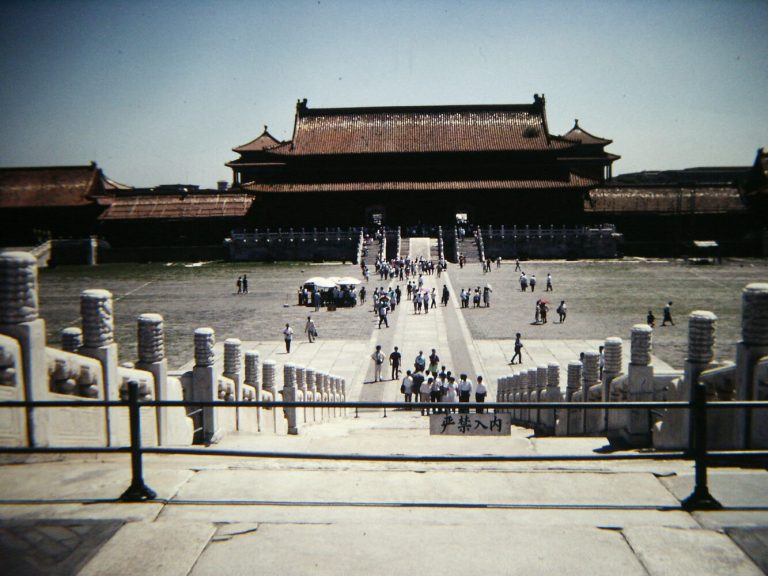
For a traveler on site, the important point is simpler: this is where the Forbidden City suddenly feels less like a museum route and more like an imperial ceremonial landscape. The wide stone court, the high terrace, the guarded circulation lines, and the distant north-south view all work together. Spend enough time here to understand the space, not only to take one front-facing photo.
What to Look For on the Terrace
Start with the approach. Before climbing or moving closer, look at the hall from the courtyard and notice how it is lifted above the surrounding ground. The building is designed to dominate the axis. From farther back, you can see the relationship between the open court, the stairways, and the layered roofline.
Once you are nearer the terrace, shift your attention from the full facade to details. Look for bronze animals, stone railings, carved drainage heads, incense vessels, and large metal water cauldrons. These details are easy to miss if you only point a camera at the roof. They also make the stop more rewarding when the hall interior is crowded or when visitor barriers limit how close you can stand.
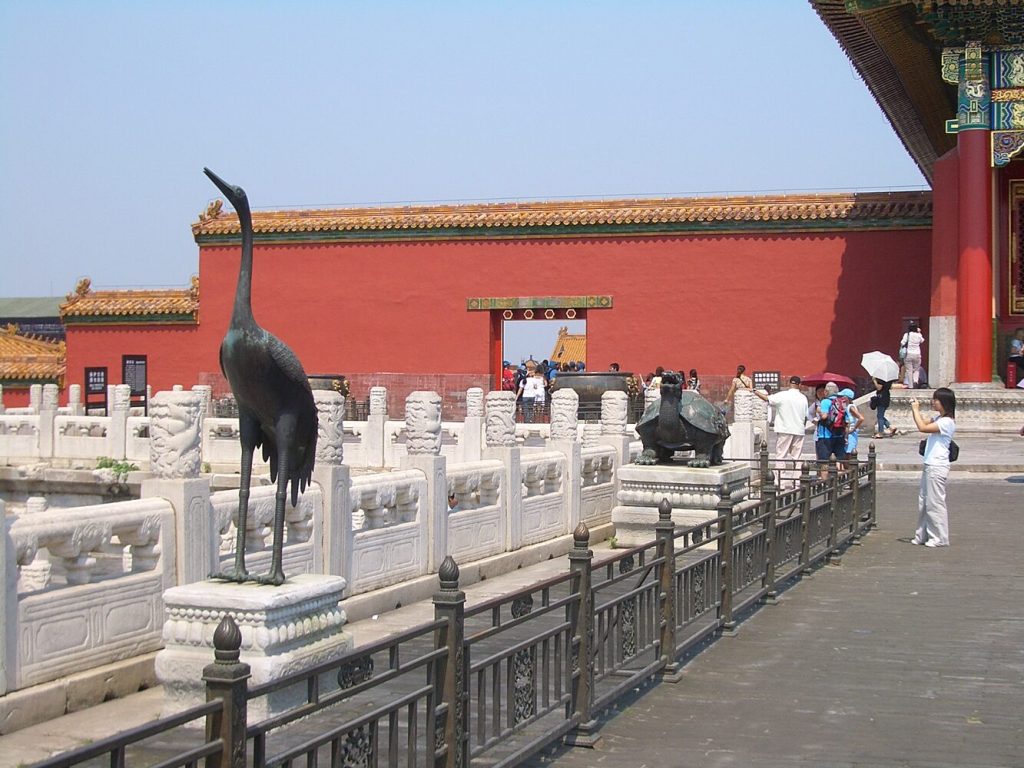
The bronze crane and tortoise are especially useful visual markers. They are often photographed because they stand clearly against the red walls and white stone, but they also help visitors notice how ceremonial objects are arranged around the hall rather than randomly scattered across the terrace.
How Long to Spend Here
For a focused first visit, allow about 10 to 20 minutes around the Hall of Supreme Harmony area. Ten minutes is enough to approach, take in the main view, and continue north without feeling you skipped the site. Twenty minutes is better if you want photos, detail viewing, or a short rest in the open court before the route narrows again.
Do not spend your entire energy here if your plan includes the central halls, selected side galleries, and the Imperial Garden. A balanced visit matters more than a perfect single-hall stop. If you only have part of the day, compare this pause with the timing suggestions in the Forbidden City half-day itinerary.
Photo and Crowd Tips
The front view can become crowded quickly because nearly everyone reaches this point. If you want a cleaner photo, avoid standing directly in the densest line of people. Move slightly to one side, use the terrace railings as foreground, or photograph the building after the largest tour groups have moved forward.
In bright summer weather, the open court can feel exposed. The stone surfaces reflect heat, and shade is limited near the main viewing points. In winter, the same open space can feel windy. The hall is still worth the stop in both seasons, but the best time of day depends on weather, light, and visitor pressure. The site-wide opening hours and best entry time guide helps with this planning decision.
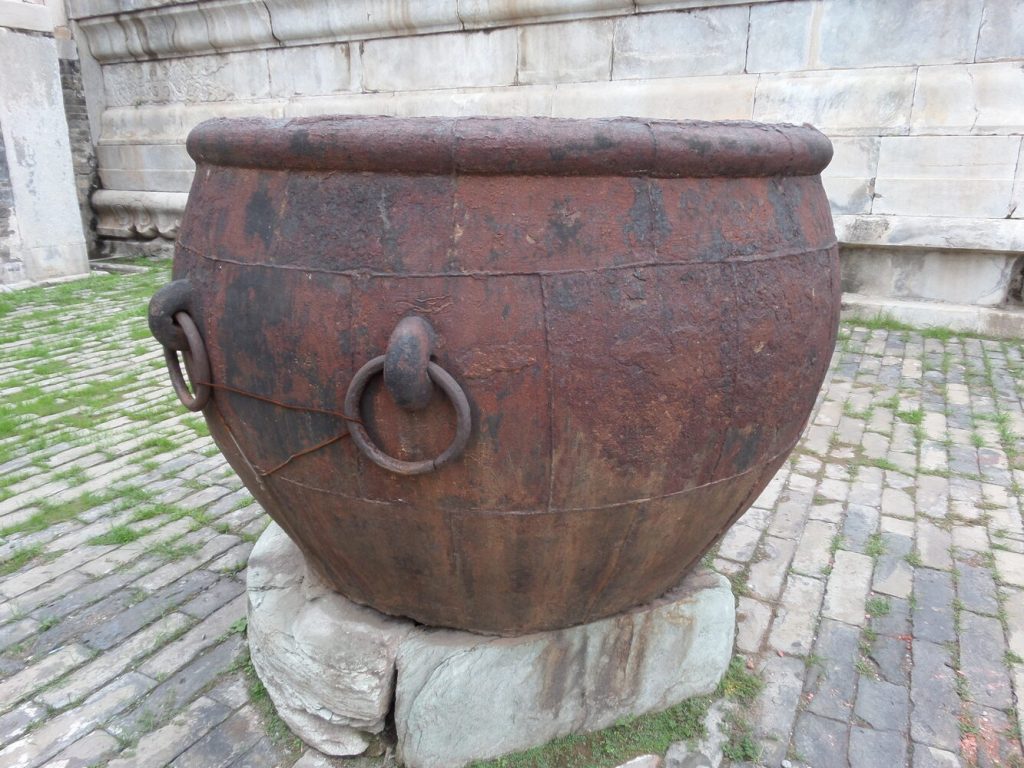
The large water cauldrons around palace buildings are a practical detail, not just decoration. They were part of the palace fire-prevention system. On a visitor route, they are also a reminder that the Forbidden City is a preserved wooden palace complex where maintenance, protection, and controlled movement are part of the experience.
Should You Detour From the Main Axis Here?
For a first visit, do not leave the central-axis route too early unless you already know which side gallery you want. The Hall of Supreme Harmony is a good point to pause and orient yourself, but it is not always the best point to begin a long detour. If you branch away too soon, you may spend more time crossing courtyards than seeing the areas you came for.
A better approach is to decide in advance whether your priority is the ceremonial axis, selected galleries, or a shorter path toward the garden and north exit. Travelers who want a calmer finish should leave enough time for the Imperial Garden route and exit tips, because the last section can feel rushed if the middle of the visit expands unexpectedly.
Common Mistakes to Avoid
- Only taking a front photo. The full facade is impressive, but the terrace objects and side angles explain more about the setting.
- Stopping too long without a route plan. This hall is central, but it is not the end of the visit.
- Ignoring weather exposure. The open court can be hot, bright, cold, or windy depending on the season.
- Assuming every nearby hall needs equal time. Choose a rhythm that matches your ticket time, energy, and interests.
Quick Visitor Checklist
- Confirm ticketing, opening, and entry notices before the visit.
- Approach from the south with enough time to pause in the Outer Court.
- Look at the hall from both the courtyard and terrace level.
- Notice bronze animals, railings, drainage details, and fire cauldrons.
- Keep moving north before the visit becomes too slow for your overall route.
The Hall of Supreme Harmony works best as a deliberate pause, not as a long standalone stop. Give it enough attention to understand the scale and details, then continue through the palace with your remaining time protected.
Related Forbidden City Guides