Last checked: 2026-06-14. Ticketing, opening, security, and holiday arrangements can change; verify current Palace Museum instructions before travel.
The Hall of Central Harmony and the Hall of Preserving Harmony are easy to rush past because most first-time visitors focus on the larger Hall of Supreme Harmony before moving toward the Inner Court. That is understandable, but it also means many visitors miss the logic of the Three Great Halls sequence on the Forbidden City central axis.
This guide explains how to see the Hall of Central Harmony and the Hall of Preserving Harmony as a practical visitor, not as a textbook list. You will know where they sit, why they mattered, how long to pause, what details to look for, and how to connect them with the rest of a south-to-north Forbidden City route.
Quick Planning Snapshot
- Location: both halls sit on the central axis after the Hall of Supreme Harmony and before the Inner Court transition.
- Best for: understanding the Outer Court sequence, court ritual, architectural scale, and the route from major state ceremony to inner palace life.
- Time needed: allow 15 to 25 minutes for both halls if you are doing a normal first-time route.
- Common mistake: taking one photo, assuming they are minor repeat halls, and walking on without reading the sequence.
- Best route link: visit them immediately after the Hall of Supreme Harmony and before moving north toward the Palace of Heavenly Purity.
Where They Fit on the Central Axis
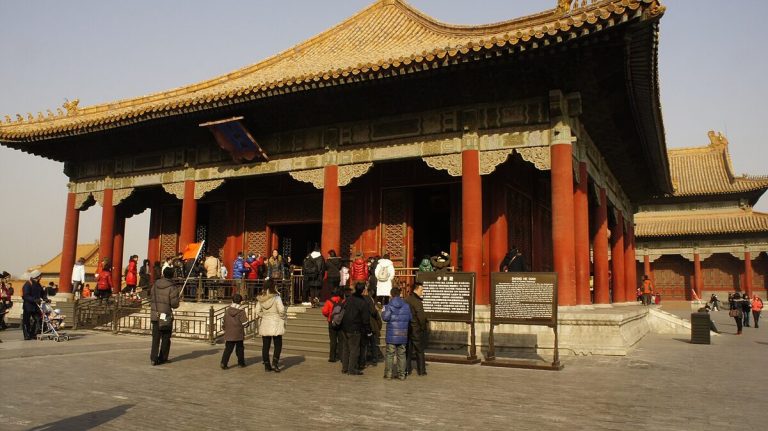
The Palace Museum identifies the Outer Court center as the Hall of Supreme Harmony, Hall of Central Harmony, and Hall of Preserving Harmony. Together they form the Three Great Halls, the ceremonial heart of the Forbidden City’s front court. For a visitor walking north, the order is important: the largest and most dramatic hall comes first, then the smaller square Hall of Central Harmony, then the Hall of Preserving Harmony before the route moves toward the inner palace zone.
If you have not read it yet, start with the Hall of Supreme Harmony guide because that hall sets the scale and symbolism for the whole Outer Court. Then use the Hall of Central Harmony and Hall of Preserving Harmony as the bridge between state ceremony and the more private-feeling Inner Court. If you are planning the whole day, the best Forbidden City route guide gives the larger route framework.
Hall of Central Harmony: The Pause Before Ceremony
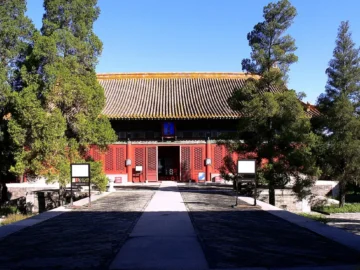
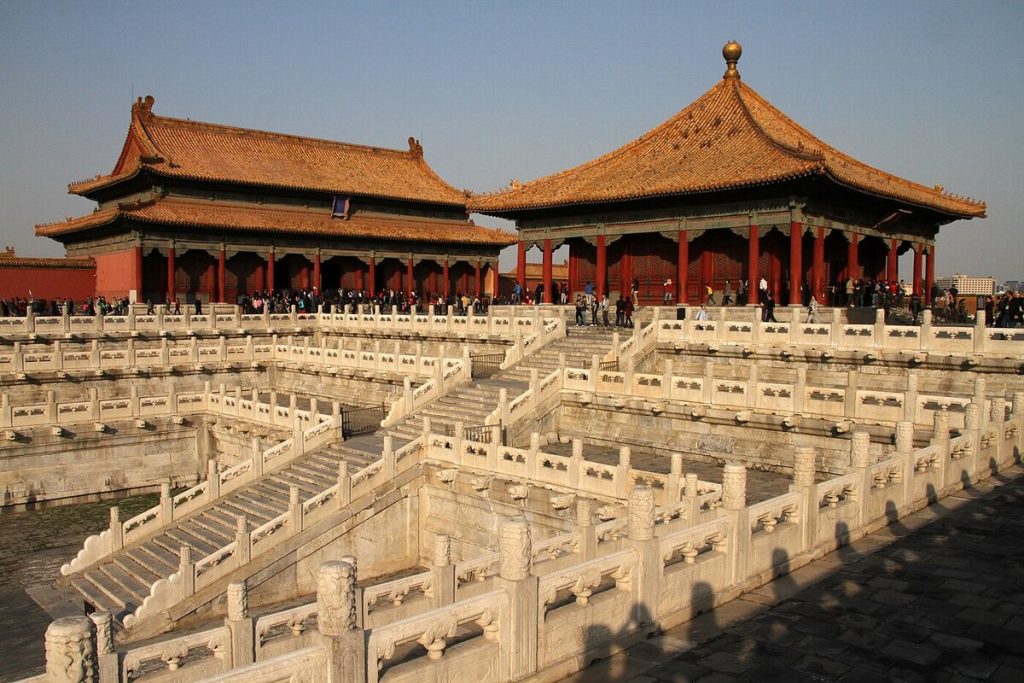
The Hall of Central Harmony is smaller than many visitors expect. The official Palace Museum building page describes it as one of the Three Great Halls, positioned between the Hall of Supreme Harmony and the Hall of Preserving Harmony. It was originally built in the early Ming period, later renamed, and in the Qing period took the name Zhonghe Dian, often translated as the Hall of Central Harmony.
Its visitor importance is not size. Its importance is function. Before major ceremonies in the Hall of Supreme Harmony, emperors used the Hall of Central Harmony as a place to rest, prepare, and receive ceremonial bows from officials. That makes it a useful mental pause on your route: you have just seen the grand public stage, and now you are standing in the smaller preparation space behind it.
Look for its compact square plan, the way it sits between larger halls, the raised platform context, and the throne setting inside. If the crowd is dense, you do not need to force a long stop. A few minutes is enough if you understand why it exists. If you are on a Forbidden City half-day itinerary, this is a read-and-move stop rather than a place to linger.
Hall of Preserving Harmony: The Last Major Outer Court Hall
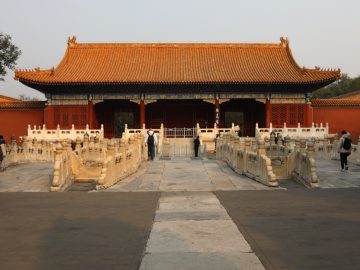
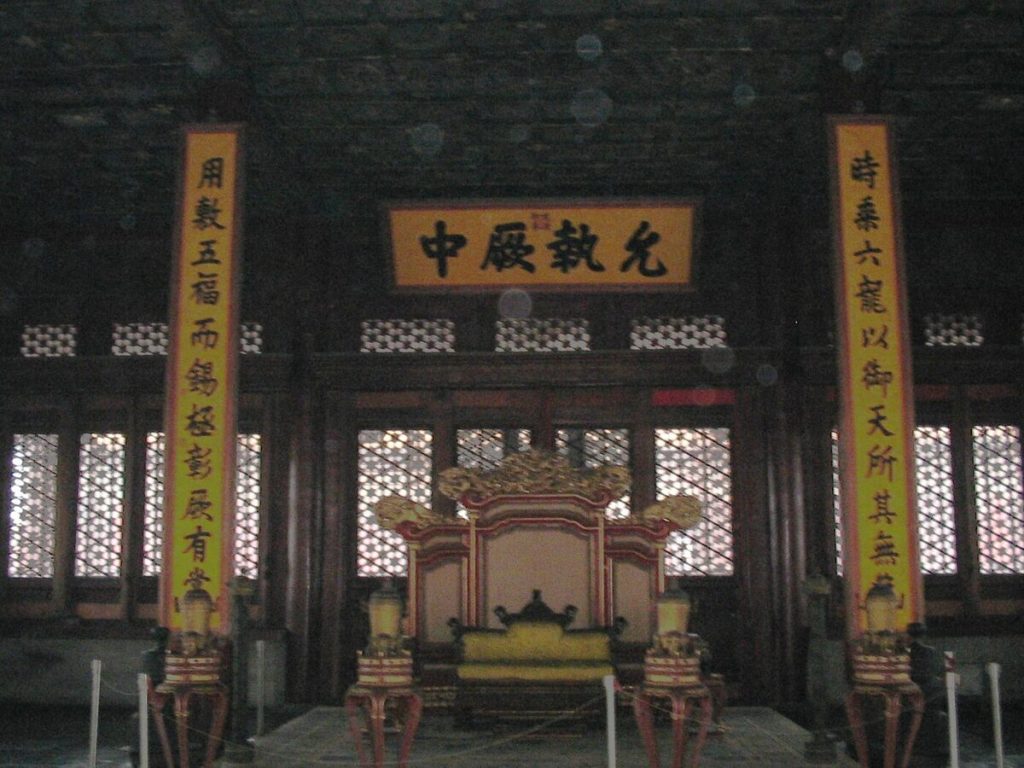
The Hall of Preserving Harmony is the third hall on the main three-tiered platform. The Palace Museum’s official building description notes that it was first built in the early Ming period, destroyed and rebuilt at different times, and finally received its Qing name Baohe Dian, the Hall of Preserving Harmony. Its meaning is tied to maintaining inner discipline and shared harmony.
For visitors, this hall is important because it is the last major Outer Court hall before the palace route changes character. After the Hall of Preserving Harmony, you are moving toward gates and spaces that lead into the Inner Court. The mood begins to shift away from vast ceremonial platforms and toward the imperial living and administrative zone.
Historically, the Hall of Preserving Harmony was connected with important imperial functions, including banquets and later the palace examination setting for top civil-service candidates. You do not need to memorize every use, but it helps to remember that the hall was not just a backdrop. It was part of the working ceremonial and political machinery of the palace.
How Long Should You Spend Here?
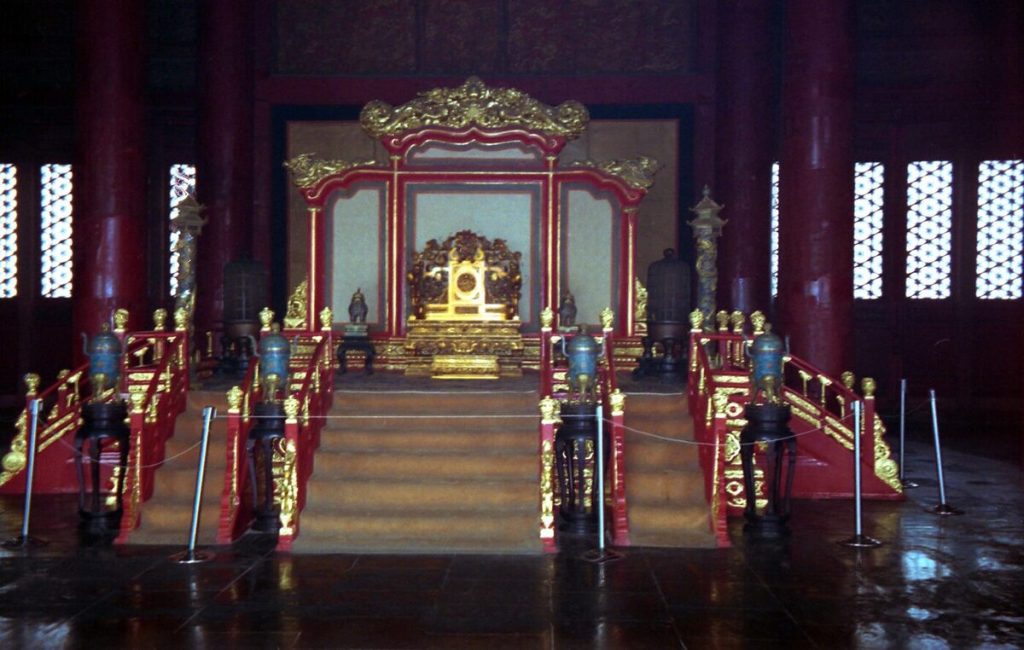
For a first visit, give the two halls together about 15 to 25 minutes. That includes reading signs, looking at the exterior, taking a few photos, and checking the interior view if the visitor flow allows it. If you are an architecture or history-focused traveler, you can spend longer, especially comparing scale, roof forms, platform levels, stair approaches, and the way the halls align with each other.
If you are short on time, do not skip both halls entirely. Instead, make a deliberate short stop: understand the Hall of Central Harmony as the emperor’s preparation pause and the Hall of Preserving Harmony as the final major Outer Court hall. That simple sequence is more useful than a rushed attempt to photograph every plaque and roof detail.
Photo Tips Without Blocking the Route
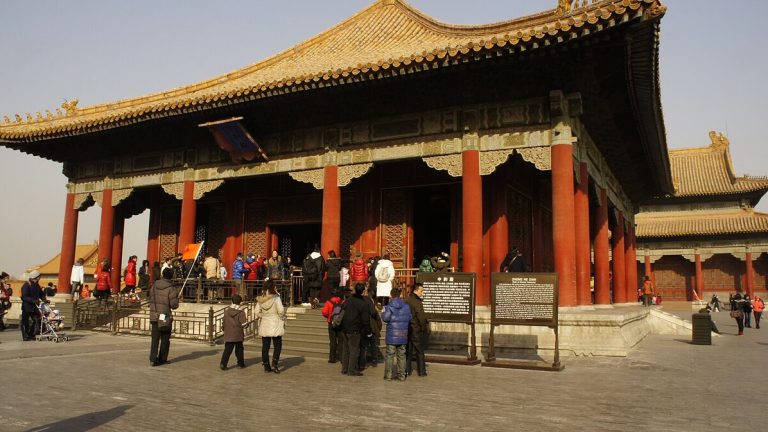
This part of the central axis can become crowded because almost every standard route passes through it. Step to the side before taking photos, especially near stairs, thresholds, and narrow viewing points. The best images often come from showing the halls in sequence rather than isolating only one facade. Try a route-view photo that shows how the Hall of Central Harmony leads visually toward the Hall of Preserving Harmony.
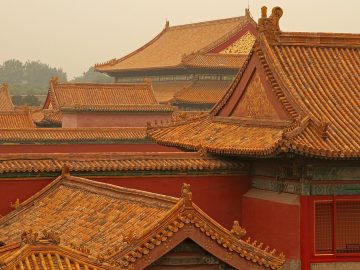
In bright summer light, rooflines and white stone platforms can become high-contrast. In winter, the lower sun may make the terraces more dramatic but colder and more exposed. If weather is affecting your day, keep the stop efficient and protect the larger route plan.
What Comes Before and After
Before these halls, most visitors have already passed the Meridian Gate, Gate of Supreme Harmony, and Hall of Supreme Harmony area. After them, the route continues toward the inner palace sequence, including the Palace of Heavenly Purity. If you need the full south-to-north logic, use the Meridian Gate to Gate of Divine Prowess route guide before your visit so you do not treat each hall as an isolated stop.
The next major change in atmosphere comes when you reach the Inner Court. The Palace of Heavenly Purity guide explains that transition well because it shifts the visitor’s attention from grand state ceremony to imperial residence and daily governance. Reading the two guides together makes the central route much easier to understand.
Official Sources to Check
For current opening, ticketing, and visitor-service information, use the Palace Museum official visitor page and the Palace Museum international Visit page. For historical and architectural details, the Palace Museum’s official building pages for the Hall of Central Harmony and Hall of Preserving Harmony are the most useful starting points. If you are visiting during holidays, bad weather, or special closures, check current Palace Museum notices before building the day around any specific hall or gallery.
Simple Visitor Checklist
- Secure your Palace Museum ticket before planning a detailed route; use the Forbidden City ticket guide if you are still unsure.
- After the Hall of Supreme Harmony, slow down enough to notice the smaller Hall of Central Harmony.
- Use the Hall of Preserving Harmony as the final Outer Court marker before the route shifts north.
- Do not block central stairs or doorways for photos; step aside and shoot the sequence from an angle.
- If time is short, remember one function for each hall rather than trying to memorize every historical name.
- Continue north with energy left for the Inner Court and Imperial Garden.
The Hall of Central Harmony and Hall of Preserving Harmony are not filler between famous stops. They are the middle and final beats of the Forbidden City’s Outer Court sequence. Once you understand that, this stretch of the route feels less like a corridor and more like a carefully staged transition through imperial power.
Related Forbidden City Guides