Last checked: 2026-06-04. Ticketing, opening, security, and holiday arrangements can change; verify current Palace Museum instructions before travel.
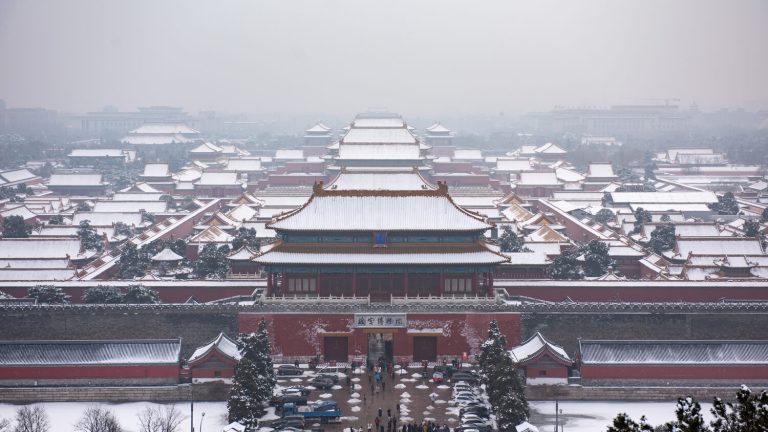
Winter can be one of the most rewarding seasons for the Forbidden City, but it needs a different plan from spring, summer, or autumn. The light is lower, the courtyards can feel wider and quieter, and snow on palace roofs can make the whole complex look sharper and more dramatic. At the same time, winter brings short daylight, cold wind, possible icy stone surfaces, and opening-hour details that should be checked before you go.
This guide is for visitors planning a Palace Museum visit from late November through early March, especially if the forecast includes cold weather, wind, or snow. If this is your first time in Beijing, keep the standard south-to-north logic from the best Forbidden City route, but adjust your pace and optional stops for winter conditions.
Check Tickets, Hours, and Weather First
Before choosing a winter date, confirm current opening hours, ticket rules, and any temporary notices on the official Palace Museum visit page. Winter is generally outside the most intense summer travel period, but that does not make ticket planning optional. Weekends, holidays, school breaks, and snow days can still create demand, and operating details may change by official notice.
For the weather side, check a current Beijing forecast such as the China Meteorological Administration forecast for Beijing. The most important winter variables are temperature, wind, snow, and visibility. A clear cold day can be excellent for photography and walking. A windy day with icy patches can make the same route feel much harder, even if the ticket and opening schedule look simple.
If you have not booked Palace Museum tickets before, read the Forbidden City tickets guide for foreign visitors before setting the day. Winter gives you more flexibility than peak summer in some weeks, but a fixed Beijing itinerary still needs a confirmed Palace Museum plan.
Best Winter Entry Time
Morning is still the best entry choice for most winter visitors. The difference is not heat avoidance, as in summer, but usable daylight and route control. Winter daylight is shorter, and the palace can feel colder in shaded corridors and open courtyards. An early start lets you move through the main axis without racing the closing window.
Use the opening hours and best entry time guide alongside this page, because last-entry and seasonal schedules should not be guessed. If you want photography, morning also gives you a better chance to work through the southern approach, the first major courtyards, and the main halls before the day becomes too tight.
Start Slow at Meridian Gate
The winter route begins before you reach the first grand courtyard. Cold weather can slow passport checks, group coordination, bag handling, and simple map reading. Give yourself a few extra minutes at the southern approach and do not plan the first hour too tightly. If there is snow or wet stone, slow down before the palace experience officially starts.
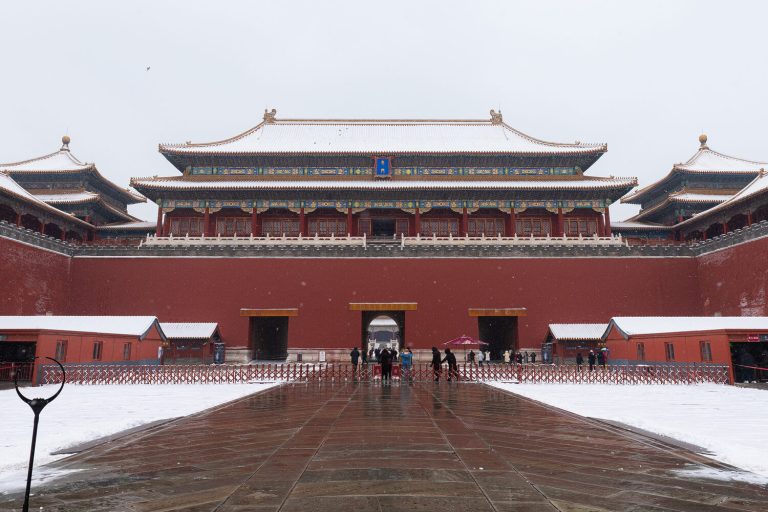
The standard visitor route still enters from the south and exits north, but winter rewards fewer unnecessary side loops. If you need gate-by-gate orientation, use the Forbidden City entrance and exit guide. It is especially useful when you are trying to avoid wasting time outside in cold wind before reaching the correct visitor flow.
A Practical Winter Route
A good winter route should feel complete without forcing every optional corner. Start at Meridian Gate, move through the Hall of Supreme Harmony area, continue north through the central halls, then choose one optional focus before the Imperial Garden and Shenwu Gate exit. The main axis gives the strongest palace structure and the easiest navigation under cold-weather pressure.
If the weather is clear and dry, you can add one gallery or side-courtyard focus. If it is snowing, windy, or slippery, keep the route cleaner. Winter conditions make repeated cross-courtyard movement less pleasant, and stone steps deserve more attention than they do on a mild autumn day.
What to Wear and Carry
Dress for outdoor walking, not for a short indoor museum visit. The Palace Museum has many exterior spaces, and you may spend long stretches in open courtyards. Warm layers, gloves, a hat, and shoes with reliable grip are more important than a heavy bag. If snow or ice is possible, avoid shoes with smooth soles.
Bring a small power bank if you rely on your phone for maps, tickets, translation, or photography. Cold weather can drain batteries faster than expected. Keep your passport or required travel document accessible but protected from snow or rain. A compact thermos can help, but do not assume you can solve every comfort problem inside the museum once you enter.
Photography in Winter
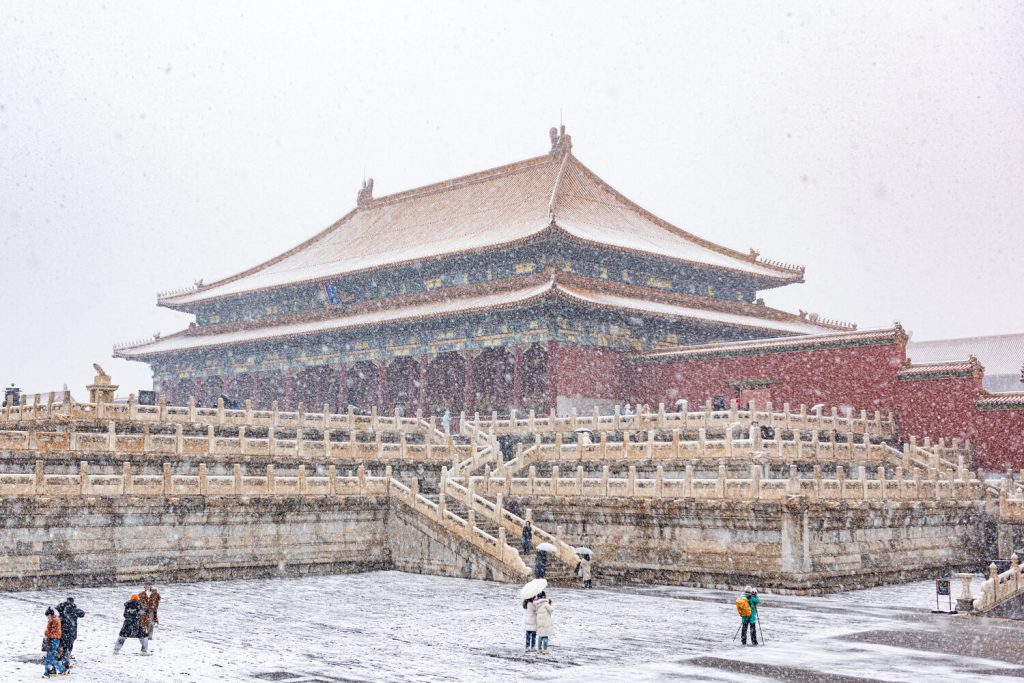
Winter photography is one of the strongest reasons to visit. Snow on yellow roofs, red walls, and stone terraces gives the Forbidden City a high-contrast look that other seasons cannot copy. The best images often come from patient positioning rather than rushing to every famous hall. Stand back where you can show rooflines, walls, and open space together.
If you want the classic overview after the museum, Jingshan Park can be excellent on a clear winter day. It is not automatic, though. The climb can be cold, steps may be slippery, and visibility can change quickly. Use the Forbidden City and Jingshan Park route only if weather, visibility, and your remaining energy make sense.
When to Shorten the Visit
Shorten the visit if wind, icy surfaces, or low visibility are making the day harder than expected. A winter visit does not fail because you skip a side gallery. It fails when the route becomes a cold endurance test and you stop absorbing the palace layout. If you need a compact version, adapt the half-day Forbidden City itinerary and keep only the most important central-axis sections.
Travelers with children or older visitors should plan even more conservatively. Rest stops, toilets, and warm breaks matter more in winter than they appear on a map. A slower, lower-pressure route is useful for any group that needs fewer last-minute decisions.
Simple Winter Checklist
- Check official Palace Museum ticket and opening notices before fixing the day.
- Check the Beijing forecast for temperature, wind, snow, and visibility.
- Choose morning entry if your schedule allows.
- Keep the route south-to-north and avoid unnecessary loops in bad weather.
- Wear shoes with grip and bring warm layers, gloves, and a charged phone.
- Decide on Jingshan Park only after you know the weather and your energy level.
A winter Forbidden City visit can be quieter, sharper, and more memorable than a peak-season visit, especially after snow. The key is to plan for real outdoor conditions. If you keep the route simple, protect your hands and feet, and leave room for weather changes, winter can be one of the best ways to understand the scale and rhythm of the Palace Museum.
Related Forbidden City Guides