Last checked: 2026-06-20. Ticketing, opening, security, and holiday arrangements can change; verify current Palace Museum instructions before travel.
The Forbidden City is easier to enjoy when you know which details are worth noticing while you walk. Many first-time visitors focus only on the biggest halls, take a few wide photos, and then leave feeling that the palace was impressive but hard to understand. A better self-guided visit is to connect the route with a short list of visual clues: roof animals, bronze cranes, fire cauldrons, dragon motifs, throne rooms, glazed walls, and courtyard scale.
This guide is for travelers who already have a basic Forbidden City route but want more meaning from the walk. It does not require deep Chinese history knowledge. It gives you practical things to look for in the places most visitors already pass. If you still need the basic order of the visit, start with the best Forbidden City route guide first, then use this page as your visual checklist inside the palace.
Quick planning snapshot
- Best for: self-guided visitors who want to understand more without hiring a guide.
- Where it works best: the central axis, major courtyards, Inner Court, and selected side areas.
- Time needed: no extra ticket is required for most details, but you should add slow-looking time to the route.
- Best method: choose five or six details before entering instead of trying to study every sign.
- Do not overdo it: details should make the route richer, not turn the day into a lecture.

Start with the roofline
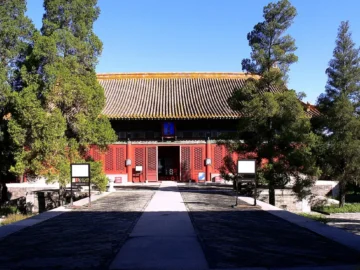
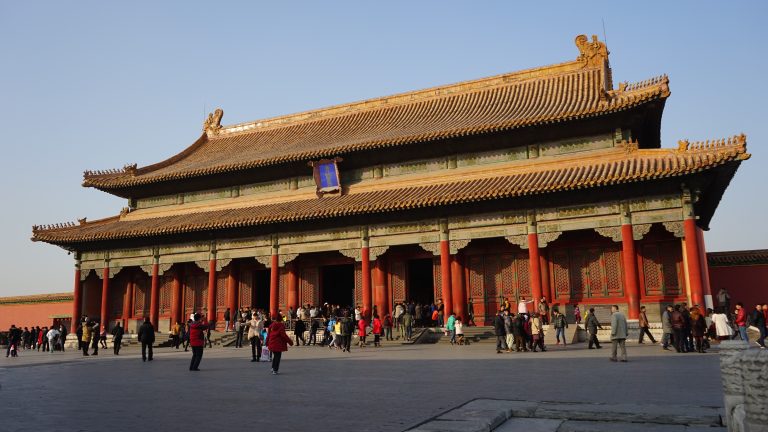
Before you read any label, look up. The roofline is one of the easiest ways to understand status inside the Forbidden City. Important buildings use large roof forms, strong symmetry, yellow glazed tiles, and decorative figures along the ridges. You do not need to identify every creature to benefit from this. Just notice how the roof becomes more ceremonial around the major halls and quieter around secondary spaces.
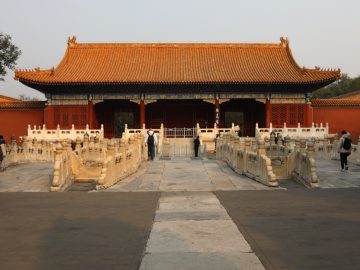
The best place to begin is the first major courtyard after the Meridian Gate. The scale, terraces, and rooflines prepare you for the ceremonial core. If you want to connect this first courtyard with the route, read the Gate of Supreme Harmony and Golden Water Bridges guide before your visit.
Use bronze animals as pause points
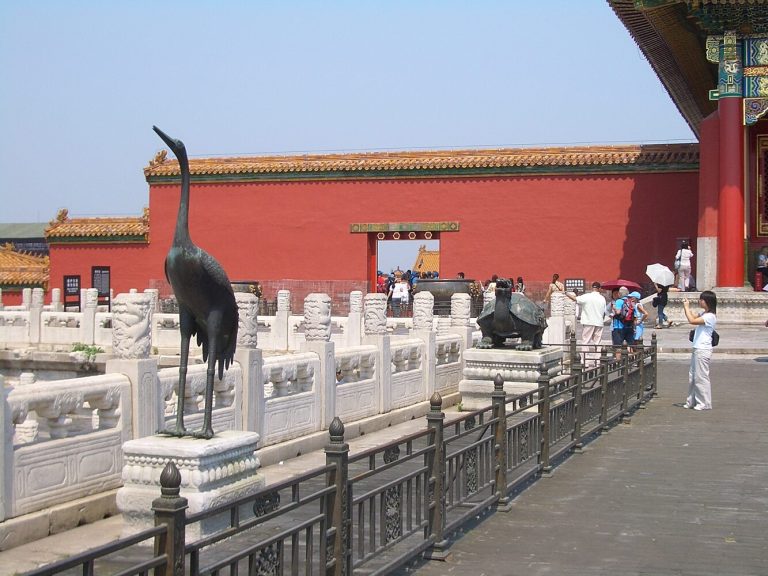
Bronze animals are useful because they make you slow down. Visitors often rush across courtyards toward the next hall, but bronze cranes, tortoises, lions, and vessels give you a reason to pause and look at the ceremonial setting around the building. These objects are not random decoration. They help frame the hall as a place of authority, ritual, longevity, and imperial display.
Do not try to photograph every bronze object. Pick one or two near the main halls and use them as orientation markers. Ask simple questions: is this object guarding an entrance, balancing the terrace, marking a ceremonial space, or decorating a route where important people once moved? That habit makes the palace feel less like a maze of similar courtyards.
Look for fire cauldrons and practical history
Not every detail is symbolic. Some details also remind you that the Forbidden City was a working palace built largely of timber. Large metal water vats and fire-related features point to the practical problem of protecting wooden halls. When you see these objects near important buildings, they help you understand why preservation, repair, and fire prevention mattered so much in a palace complex of this size.
This is also a good way to keep children or first-time visitors engaged. Instead of asking them to remember hall names, ask them to spot what would have helped protect the buildings, what looks ceremonial, and what seems designed for movement through the courtyard. For a family-focused version of this approach, the Forbidden City with kids guide has more pacing and rest-stop advice.
Use dragons carefully, not everywhere
Dragons are one of the most recognizable Forbidden City symbols, but they can become overwhelming if you try to find every example. Use them selectively. Notice dragons on walls, screens, throne settings, roof decoration, and objects, then compare how the material changes the feeling. A glazed dragon wall feels different from a carved throne detail or a painted ceiling pattern.
The Nine Dragon Wall is the easiest place to focus on this theme because the dragons are large, colorful, and concentrated in one place. It can be a worthwhile add-on if your route and ticket choices allow it. The Forbidden City Nine Dragon Wall guide explains where it fits and when it is worth adding.

Understand throne rooms without crowding the doorway
Throne rooms are popular, which means the front of the viewing area can become crowded. You do not always need to push forward for a perfect view. Step back first and look at the building, approach, terrace, and doorway. Then, if the crowd allows, look inside for the central arrangement: throne, screen, plaques, columns, and symmetrical placement. This helps you understand the room even if you cannot stand in the best photo position.
The Palace of Heavenly Purity is a good example of a place where the building’s role matters as much as the interior view. It sits on the Inner Court route and marks a shift from the grand ceremonial Outer Court toward more residential palace spaces. If this section interests you, use the Palace of Heavenly Purity guide as pre-visit reading rather than trying to absorb everything in the crowd.

Notice how scale changes as you move north
One of the best self-guided observations is the change in scale. The southern half feels grand, open, and ceremonial. As you move north, spaces often feel smaller, more enclosed, and more connected to daily court life. This change helps the route make sense. You are not just walking through a series of buildings; you are moving from public imperial ceremony toward more private palace areas.
Pay attention to how your walking speed changes. Big courtyards encourage wide photos and fast movement. Smaller palace areas encourage closer looking. If the route starts to feel repetitive, this scale shift is a useful reset. It tells you that the palace is changing in function, not just repeating the same architecture.
Use details to decide what to skip
Details can improve your visit, but they can also slow you down too much. If you stop for every roof figure, every plaque, every bronze vessel, and every sign, the route will become tiring. Choose a small set of themes before entering: roofline, bronze objects, dragons, throne rooms, and scale change. Once you have seen enough examples of each, keep moving.
This matters most if you are combining the Forbidden City with another Beijing stop. A detail-focused visit pairs well with Jingshan Park only if you still have energy at the north exit. If that combination is part of your day, check the Forbidden City and Jingshan Park route before committing.
Simple detail checklist
- Look up at the roofline before entering each major courtyard.
- Use bronze animals and vessels as pause points, not just photo props.
- Find one practical feature connected to fire prevention or building protection.
- Compare at least two dragon details in different materials.
- Step back from throne rooms before trying to see the interior.
- Notice how the palace scale changes between the Outer Court and Inner Court.
- Stop looking when the details start to make the route tiring.
Bottom line
The best Forbidden City details are the ones that make the route clearer. Roof animals, bronze cranes, fire cauldrons, dragons, throne arrangements, and changing courtyard scale all help you understand the palace without needing a long lecture. Pick a few details before you enter, connect them to the route, and let them slow you down just enough to see the Forbidden City as more than a sequence of large halls.
Related Forbidden City Guides